

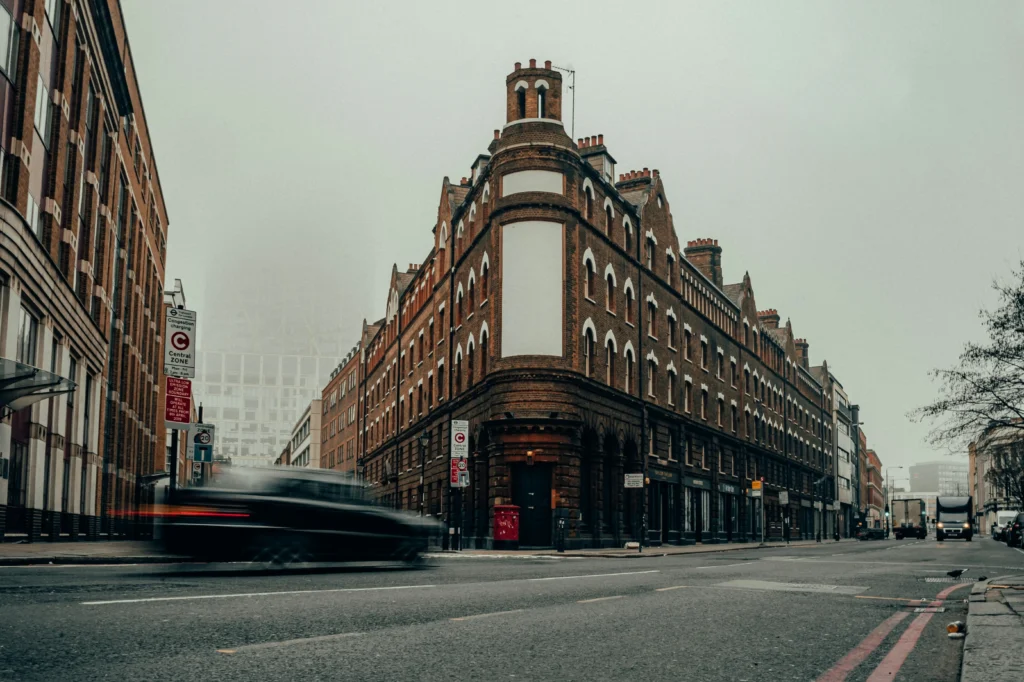
Related reading: London In-Between Weather Dressing: Essentials That Serve All Day
London between February and April operates on two temperatures simultaneously. You leave the house in what feels reasonable, spend the day moving between overheated Tube carriages and wind tunnels masquerading as streets, and somehow need the same outfit to work for both. The solution isn’t more clothes—it’s smarter ones. What follows is a wardrobe system built on layering intelligence rather than trend anxiety, with formulas that hold through changeable days without looking effortful.
The two-temperature rule (outdoors vs indoors)
The fundamental problem: London in-between weather demands clothes that adapt without requiring a costume change. What works is understanding the differential.
- What changes: Your outer layer needs to be something you can remove, carry, or tie without resentment. If a coat only works when worn, it’s already failed half its job.
- What doesn’t: Your core outfit—the bit people see when you’re indoors—should function as a complete look. No thermal underlayers showing, no sad cardigans you’d never wear alone.
- The carryable layer principle: Anything you might remove must either fit in your bag, look intentional when tied at the waist, or drape over your arm without wrinkling into defeat. This tends to rule out most puffer jackets and anything described as ‘cosy’.

The core wardrobe (8–10 pieces)
This isn’t a capsule in the restrictive sense. It’s the reliable foundation that makes getting dressed faster, not harder.
Grey wool blazer — The piece that makes jeans look considered and trousers look expensive. Choose one that works over knitwear without pulling.
Lightweight merino knit in charcoal or navy — Warm enough for February mornings, breathable enough for April afternoons, packable when the heating wins.
White cotton shirt (non-iron finish) — For the days when a blazer alone feels too warm. Under or instead of, never both struggling.
Straight-leg dark jeans — The pair that reads as trousers from across a room. No distressing, no embellishment, no apologies.
Tailored trousers in navy or grey — Wide enough to move, tapered enough to tuck into boots without bunching. The everyday pair, not the interview pair.
Trench coat in stone or khaki — The only coat that looks equally correct over knitwear and summer dresses. Choose one with a belt you’ll actually use.
Leather ankle boots (low heel or flat) — Grip for wet pavements, polish for pub floors. Chelsea or lace-up, never delicate.
Structured tote or cross-body bag — Large enough for the coat you removed at 10 am, smart enough for the dinner you didn’t plan at 7 pm.
Optional additions: A fine-knit cashmere jumper (cream or camel) for when grey feels heavy. A silk or cotton scarf in a colour that isn’t navy, grey, or beige—your only pattern if you prefer, or simply texture.
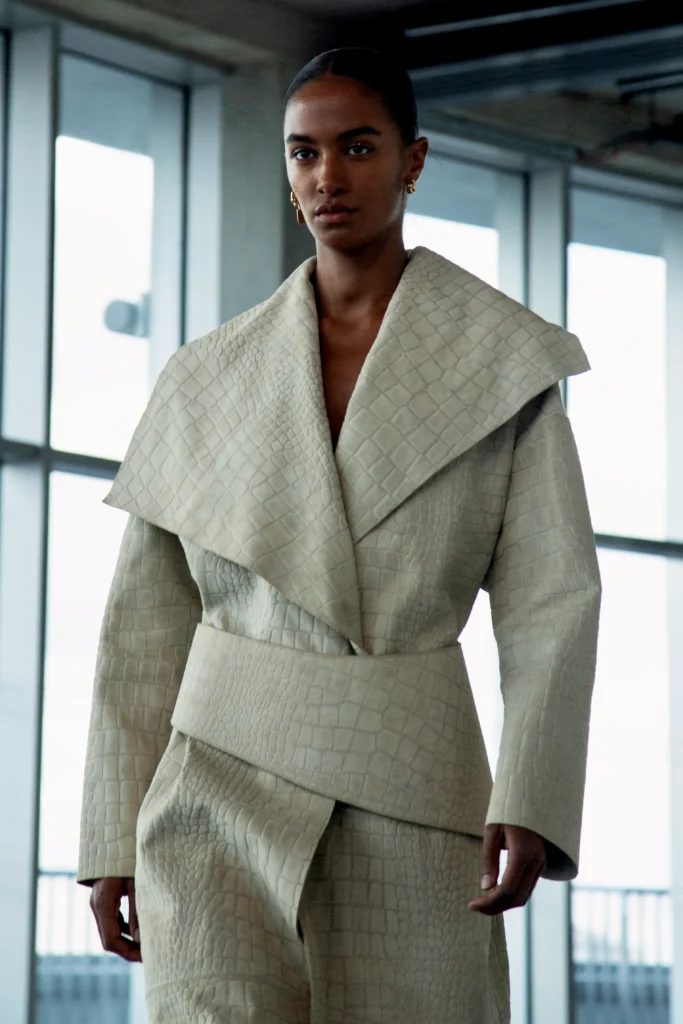
Five layering formulas that always look intentional
The difference between looking thrown-together and looking unfussy is often just the order things go on.
1. White shirt + grey blazer + jeans + ankle boots The foundational formula. Works for client meetings and Saturday errands without telegraphing either. Add a belt if the jeans need help; skip it if they don’t.
2. Merino knit + trench + tailored trousers + loafers For days that start cold and end moderate. The knit provides warmth without bulk under the trench. Loafers instead of boots when pavements have dried.
3. White shirt (half-tucked) + trousers + trench (belted) + boots The formula that photographs well without trying. Half-tuck only the front; leave the back loose. Belt the trench for structure.
4. Grey blazer over merino knit + jeans + boots + scarf When you need a third layer but a coat feels excessive. The scarf isn’t decorative—it’s the buffer between indoor heating and outdoor wind.
5. Cashmere jumper + tailored trousers + trench (open) + ankle boots For the in-between days of late March and April. The trench becomes a windbreaker rather than a coat. Sleeves pushed to three-quarter length.
Shoes for wet pavements (and still chic)
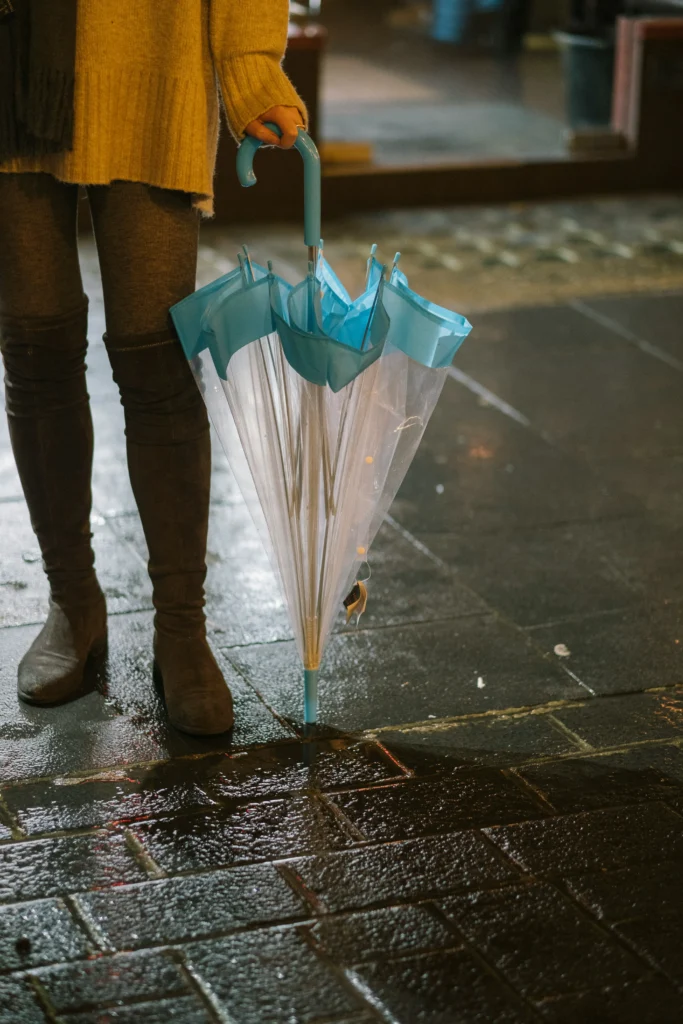
London pavements between February and April exist in a permanent state of damp threat. What works must combine grip, water resistance, and the ability to transition from pavement to restaurant floor without looking apologetic.
Chelsea boots in leather (not suede) — Rubber soles, low profile, slip-on speed. The pair that lives by the door because you reach for them most.
Lace-up ankle boots with commando sole — More grip than Chelseas, more structure than trainers. Choose leather that improves with weather exposure rather than suffering from it.
Loafers with rubber lug sole — For the brief windows when it hasn’t rained for six hours. Still practical, but lighter in spirit. Polish matters here.
Avoid if possible: Ballet flats (no grip, soaked in minutes), trainers that only work with athleisure, anything in suede unless you enjoy anxiety, heeled boots over 6 cm (cobblestones are unforgiving).
Colour & texture (how neutrals look expensive)
The palette for London in-between weather isn’t about restriction—it’s about intentionality. Neutrals work when they’re chosen for texture rather than defaulted to from fear.
Palette 1: Cool and architectural Grey (three shades: charcoal knit, mid-grey blazer, pale grey trousers), navy, white, black (sparingly). Add texture through cable knit, flannel, or oxford cotton. One metal accent—silver jewellery or a leather watch—completes it.
Palette 2: Warm and grounded Camel, cream, khaki, chocolate brown, ivory. Texture is critical here—cashmere, wool gabardine, brushed cotton. Without it, you risk looking unfinished. A burgundy or rust scarf prevents blandness without disrupting calm.
The one-texture-statement rule: In any outfit, allow one piece to carry textural interest—a cable knit, a flannel trouser, a grained leather bag. More than one competes; zero looks flat.
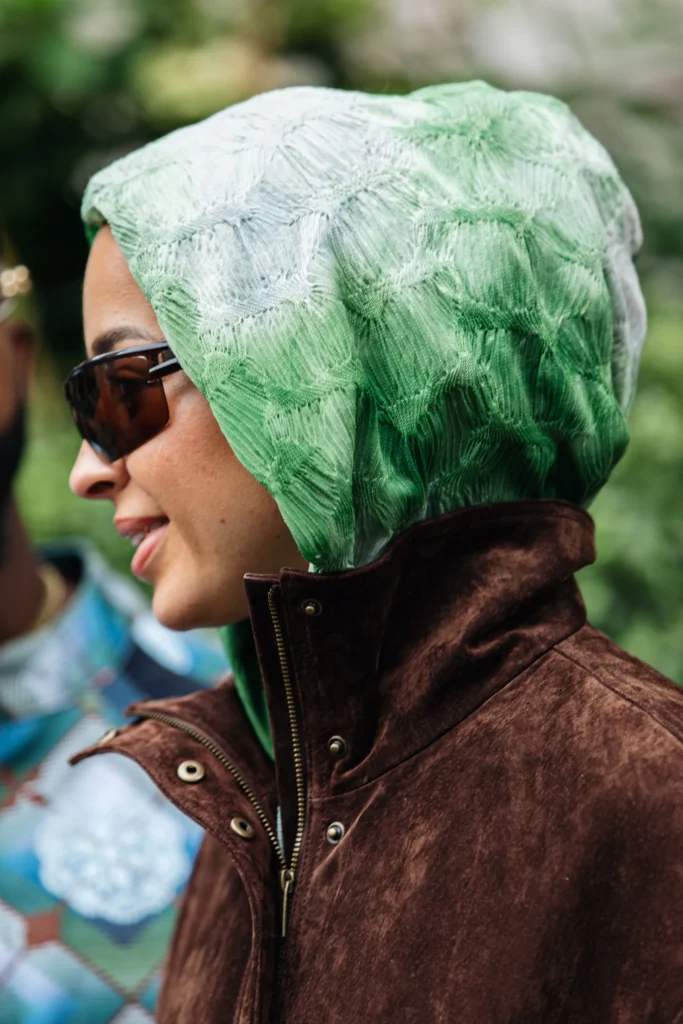
Eight outfit ideas (Feb to Apr)
For work (office or client-facing)
Early February cold snap: Merino knit (charcoal) + tailored trousers (navy) + trench (belted) + Chelsea boots + structured tote. Scarf in car or bag, deployed only outdoors.
Late March warming: White shirt (sleeves rolled) + grey blazer + dark jeans + loafers + cross-body bag. Blazer carried after 3 pm if needed.
For weekend (running errands to meeting friends)
February Saturday, rain likely: Cashmere jumper (cream) + jeans + trench (open) + lace-up boots + tote with scarf tucked inside. Practical, not frumpy.
April Sunday, optimistic: White shirt (half-tucked) + tailored trousers + grey blazer (over arm) + loafers + small cross-body. The outfit that works if you end up in a pub garden.
For dinner or drinks (pub to restaurant)
Cold evening, February: Merino knit (navy, fine gauge) + tailored trousers + ankle boots (polished) + trench + leather bag. Coat check available? Use it. None? The knit must work alone.
Warmer evening, April: White shirt + jeans (dark, no distressing) + grey blazer + loafers or ankle boots + small bag. Blazer stays on; looks intentional rather than corporate.
Weekend dinner, mid-March: Cashmere jumper (camel) + trousers + trench (carried or checked) + Chelsea boots + jewellery that isn’t an afterthought. This is where texture in the knit earns its keep.
Impromptu drinks after work: Grey blazer over white shirt + jeans + ankle boots + scarf (silk or fine wool, not chunky). The scarf elevates it from ‘still in work clothes’ to ‘made a small effort’. Remove the blazer if the pub is warm; the shirt and scarf hold.
Quick checklist (save this)
Before you leave the house, the outfit should answer yes to all four:
- Can I remove one layer and still look intentional?
- Are my shoes appropriate for wet pavements and my final destination?
- If it rains, does anything become unwearable?
- Does my bag fit the coat I might remove?
Three things to keep in your bag between February and April: a packable scarf, an umbrella under 25 cm, and a neutral lip colour that works if plans extend past 6 pm.
The system, not the stuff
London in-between weather doesn’t require a full wardrobe renovation. It requires understanding the two-temperature problem and choosing pieces that solve for it without fuss. A grey blazer that works over knitwear. A trench you can carry. Boots with grip that don’t look apologetic. Once the system is in place, getting dressed becomes faster and the results more reliable.